Showing posts with label eCommerce Personalization. Show all posts

Monday, May 18, 2020

Complete Guide On eCommerce Personalization in 2020


Personalization is the future of ecommerce. It’s that simple.

It would be easy to throw a ton of statistics at you. Like the fact that 91% of customers are more likely to buy from an online store that provides personalized experiences. Or the growing willingness among users to share their personal information in exchange for tailored recommendations and offers.
But, fundamentally, personalization is so important because it enables retailers to market to customers in a way that directly and precisely meets their needs and desires.

So how can you personalize your store for more sales and revenue?

In this post, we’re going to look at twenty-seven real-life examples of ecommerce personalization. These examples are simple, effective, and you can replicate all of them without allocating significant resources.

Facts about ecommerce personalization

What Is Ecommerce Personalization?


Ecommerce personalization is the process of creating shopping experiences that cater specifically to individual customers and not a single broad audience.

Rather than taking a one-size-fits-all approach to ecommerce, retailers will ensure that important elements of the customer journey, including on-site browsing, email, social media activity, and even paid ads, change based on the needs and past behavior of customers.

You might be asking, “That’s all well and good, but what’s the point of personalization?”

Personalization results in happier customers that are more willing to purchase from your store. 
It’s a fair question. Creating elements, both on-site and off-site, that adapt to individual customers is more resource-intensive than opting for a single, general solution.

But the answer is simple. Personalization drives more sales. A lot more sales. Retailers report a 20% increase in sales after implementing personalized features.

So the moral of the story is that by overlooking personalization, you’re leaving a sizeable chunk of revenue on the table for your competitors to snap up.

What Are Personalized Product Recommendations?


Personalized shopping recommendations are recommendations based on a shopper’s profile. They are usually determined by two things: past visitor activity and preferences that a customer has selected on your site.

Recommendations are most often displayed either on product pages or in sales emails.
On product pages, customers might see sections displaying related products, recently viewed products, product ads based on past activity, and so on.

There are many possible personalized email recommendations. Customers may choose, for example, to be notified of updates about out-of-stock products or opt-in to category-specific mailing lists. Equally, customer data can be used to send customers information about relevant promotions, products they have abandoned before finishing checkout, or suggestions based on past purchases.
Personalized recommendations can even be delivered through paid ads. Facebook remarketing, for example, allows retailers to target past visitors with ads for products they have previously viewed or added to their cart without purchasing.

What Are Personalized Social Media Notifications?


You can use personalized social media notifications to interact directly with customers through social media.

This is made possible by AI-run chatbots, which give you the ability to communicate with thousands of customers as though you were talking in person. Users can open their Facebook messenger app, for example, and order a new product they have recently viewed. Or they may wish to speak to customer service to process a refund or check the availability of an item in a local store.

It’s also possible to send users direct messages to build engagement. You can thank them for a purchase, ask them for a review, notify them of a new product they might be interested in, or just wish them a happy birthday.

What Are Personalized Triggered Emails?


Triggered emails are personalized emails that are sent when a customer undertakes a specific action.
#EmailMarketing is still one of the most effective methods of promotion for online retailers, boasting an average 35% open rate. Personalizing emails further increases their effectiveness. Click To TweetHere are four of the most common “triggered emails”:

  • Welcome emails that are sent when a customer first makes a purchase or registers an account on a site.
  • Abandoned cart emails prompting customers to complete a purchase. This type of email is sent after a customer adds a product to their cart but doesn’t finish the checkout process.
  • Reactivation emails which are sent after a period of inactivity, incentivizing customers to make a purchase by offering them a promotion or discount.
  • Order follow-up emails that notify customers of an item’s shipping and delivery status.
The beauty of triggered emails is that they’re effective at boosting sales but don’t require vast swathes of customer data. Most email marketing platforms integrate with site tracking software, making it easy to automate triggered emails.

Some Are Examples of Ecommerce Optimization You Can Use to Boost Your Store’s Conversions


Now that you got a solid overview of the different types of personalization strategies, let’s move onto the examples themselves.

1. Run Geo-Location Alerts


If you have separate stores for visitors from different countries, offer to redirect them when they land on the wrong site. Most retailers will have country-specific domains (.com, .co.uk, .fr, etc.) for international customers.

There is a caveat to this tactic, however. Don’t force customers to view products on a country-specific site. Often, visitors will leave your store because they’re actually in the right place but your geo-location script keeps trying to redirect them.


2. Provide Seasonal Content


Seasonality plays a significant role in some ecommerce sectors, especially fashion. Customers will be looking for different products depending on the time of year they visit your site.
You can pre-empt this interest by including notifications and offers that are tied to specific seasons like spring, summer, autumn, and winter, or even holidays like Halloween and Christmas.
One of the quickest ways to implement this strategy is by including season-specific elements on your homepage and in site-wide areas like the sidebar and header. You should also alert customers to new lines and seasonal promotions via email..

It goes without saying that seasonal content will not apply to every segment of your market, and you should account for seasonal variations and holidays in different countries and hemispheres.


3. Cover the Basics With Personalized Emails


Personalization has the power to dramatically increase the effectiveness of your email marketing campaigns, prompting customers to open, read, and click on emails.
While you can leverage many different types of personalized emails, for various situations and segments of your customer base, there are a few that you should send to all customers.
Here are the essential emails to include in your personalization strategy:

  • Order updates – Let customers know when their order has been processed, shipped, delivered, etc.
  • Feedback emails – Ask customers what they thought about their purchase and if they had any problems. These emails are also great for generating customer reviews.
  • Subscription alerts – If you expect customers to use a product more than once, such as with consumable household items, send them an email after the usual period of use.
Because they’re so common, many customers expect the personalized emails outlined above, especially when it comes to shipping and delivery updates. Failure to send them will often result in negative customer experiences.

4. Personalize the Homepage


Your homepage will likely be one of the most popular pages on your whole store, if not the most popular page. It’s prime space for advertising products, promotions, and offers.
Whenever a customer lands on your homepage, they should see a host of personalized links, including their preferred categories, recently-viewed products, suggested items, and more.
Just look at how many personalized elements are included on Amazon’s homepage:

You might be worried about overwhelming customers, but it’s entirely possible to organize numerous homepage elements in an easy-to-view way, that allows visitors to pick the options most applicable to them.


Read More Inspiring eCommerce Personalization Examples


Friday, November 22, 2019

A Complete Guide On eCommerce Personalization

eCommerce Personalization


As stated by reports it has been Accepted that 2017 was a dynamic year for eCommerce, it was tied in with changing trends and trials. B2B (business to purchasers) eCommerce approached, and development in the retail business, Mobile eCommerce have set up a base for capitalization in the market. Presently, in 2019 it is normal that with the change some significant advances will be taken to change the old thoughts.

What is eCommerce Personalization?


The expression "eCommerce Personalization" is recognizable among online retailers, and this we consider certain elements such as the act of making singular discussions and encounters. On eCommerce sites, you more likely than not seen the progressively showing substance, item proposals or media that further relies on perusing conduct, socioeconomics, and brain research, and buy history information. eCommerce Personalization is, effectively comprehended by genuine models alongside strategies that are utilized in Successful eCommerce stores. 

In this highly aggressive retail situation, eCommerce personalization is a fundamentally focused differential. Representatives who successfully convey Personal shopping experience either disconnected or on the web, they can attract More Customers, in improving dependability, and Increase Conversion rates. 

It is utilized to give the best service to a Customer, for example, eCommerce sales; personalization here and there connotes coordinated showcasing plans; through which undertaking's Web page is changed to focus on every individual purchaser explicitly. Personalization is the most straightforward method for arriving at the Customer's needs more effectively. Communicating with Customers in a quicker and simpler manner and, therefore, expanding consumer loyalty is the principle motivation behind visits.

Personalization is very useful some Ways, For Example, on the off chance that you have purchased any things from a specific online site, at that point next time when you will visit, they will give a well-disposed condition and encourages you by offering the best alternatives. This will definitely make the bond more grounded, and more clients will pull in. Each online site will help you in various manners; there are numerous entrance locales that permit webpage guests to adjust the page and chose the best choices from new classifications. There are different destinations from where you can get data, for example, neighborhood climate forecasts just as different highlights.

Significance of Personalization in eCommerce:- 


Personalization is very basic for collaborating with Customers by methods for powerful Content and other Software. Company Focus on content and other individual highlights, for example, investigation and Automation methods, and Information Collection. This is considered as a proper strategy for expanding revenues and Customers. 

Improved Interaction or Engagement 

Through eCommerce personalization, an individual can understand the need of Customers in a Better Way. Consequently, Interaction with Customers can assist you in providing better Services, so you can reach up to Audiences' expectations. The best method to engage with Customers is to invest more Time with Customers by talking who visits your site; so you can return later on. This Engagement can assist you in reaching some Extra Goals.

Increased conversions 

The more customers will interact more they can gain more information. This can expand the sales as well as Conversion rate which prompts support the target content. Companies execute certain strategies for managing records and increment the sales just as general conversion. Through this one can grab the eye of your buyers for a longer lifespan. 

Increase in customer retention

Almost certainly to reconnect the Customers; Companies prefer some compelling ideas. One of the most well-known strategies which are utilized in the online or offline sectors is Companies give the choice of sparing scores for the next shopping. In addition, giving them discount coupons and taking the assistance of imaginative strategies for rewarding is an interesting method for holding customers. Free delivery, welcoming in events, sending free samples of new products and the feedback alternative is to tempt audiences.

Types of Personalization in eCommerce:


Personalization is tied in with enchanting customers with the best offers. It isn't scary with the best offers. It is very significant for traders the individuals who favor their customers. 

Utilizing detail of customers

By knowing the individual information of customers you can cooperate with them in the best manner. In close to personal details, we focus on multiple things, for example, name, gender, and age. After this, the traders can cooperate with customers through email. 


Are You Looking For Email Marketing Service? 


Behaviorally triggered emails

Behavioral personalization centers around significant detail, for example, a customer who has visited a site; the individuals who wish to a purchased product. It is about the automated basket of customers. 

Product recommendations 

The term personalization isn't only about sending or getting emails. Different elements that assume a significant job are the landing page or product page through which you can get total data in regards to each visitor. 

Personalized call-to-action

In this kind of personalization, it covers all type of campaign. In this as instead of targeting sufficient customers; one should focus on a specific buyer and their interest. 

Customer profiling 

Customer profiling is about the suggestion dependent on a Customer like and dislike. It resembles a mystery that incorporates a calculation that includes data with respect to the conduct of customers.

Thursday, November 7, 2019

20+ eCommerce Personlaization Examples to Raise your Comversions

Personalization is the future of ecommerce. It’s that simple.
It would be easy to throw a ton of statistics at you. Like the fact that 91% of customers are more likely to buy from an online store that provides personalized experiences. Or the growing willingness among users to share their personal information in exchange for tailored recommendations and offers.

But, fundamentally, personalization is so important because it enables retailers to market to customers in a way that directly and precisely meets their needs and desires.
So how can you personalize your store for more sales and revenue?

In this post, we’re going to look at twenty-seven real-life examples of eCommerce personalization. These examples are simple, effective, and you can replicate all of them without allocating significant resources.


What Is Ecommerce Personalization?


Ecommerce personalization is the process of creating shopping experiences that cater specifically to individual customers and not a single broad audience.

Rather than taking a one-size-fits-all approach to ecommerce, retailers will ensure that important elements of the customer journey, including on-site browsing, email, social media activity, and even paid ads, change based on the needs and past behavior of customers.
You might be asking, “That’s all well and good, but what’s the point of personalization?”

Facts about ecommerce personalization

Personalization results in happier customers that are more willing to purchase from your store. 

It’s a fair question. Creating elements, both on-site and off-site, that adapt to individual customers is more resource-intensive than opting for a single, general solution.

But the answer is simple. Personalization drives more sales. A lot more sales. Retailers report a 20% increase in sales after implementing personalized features.

So the moral of the story is that by overlooking personalization, you’re leaving a sizeable chunk of revenue on the table for your competitors to snap up.

What Are Personalized Product Recommendations?


Personalized shopping recommendations are recommendations based on a shopper’s profile. They are usually determined by two things: past visitor activity and preferences that a customer has selected on your site.

Recommendations are most often displayed either on product pages or in sales emails.
On product pages, customers might see sections displaying related products, recently viewed products, product ads based on past activity, and so on.

There are many possible personalized email recommendations. Customers may choose, for example, to be notified of updates about out-of-stock products or opt-in to category-specific mailing lists. Equally, customer data can be used to send customers information about relevant promotions, products they have abandoned before finishing checkout, or suggestions based on past purchases.

Personalized recommendations can even be delivered through paid ads. Facebook remarketing, for example, allows retailers to target past visitors with ads for products they have previously viewed or added to their cart without purchasing.

What Are Personalized Social Media Notifications?


You can use personalized social media notifications to interact directly with customers through social media.
This is made possible by AI-run chatbots, which give you the ability to communicate with thousands of customers as though you were talking in person. Users can open their Facebook messenger app, for example, and order a new product they have recently viewed. Or they may wish to speak to customer service to process a refund or check the availability of an item in a local store.
It’s also possible to send users direct messages to build engagement. You can thank them for a purchase, ask them for a review, notify them of a new product they might be interested in, or just wish them a happy birthday.

What Are Personalized Triggered Emails?


Triggered emails are personalized emails that are sent when a customer undertakes a specific action.
#EmailMarketing is still one of the most effective methods of promotion for online retailers, boasting an average 35% open rate. Personalizing emails further increases their effectiveness. 

Here are four of the most common “triggered emails”:
  • Welcome emails that are sent when a customer first makes a purchase or registers an account on a site. 
  • Abandoned cart emails prompting customers to complete a purchase. This type of email is sent after a customer adds a product to their cart but doesn’t finish the checkout process.
  • Reactivation emails which are sent after a period of inactivity, incentivizing customers to make a purchase by offering them a promotion or discount.
  • Order follow-up emails that notify customers of an item’s shipping and delivery status.
The beauty of triggered emails is that they’re effective at boosting sales but don’t require vast swathes of customer data. Most email marketing platforms integrate with site tracking software, making it easy to automate triggered emails.

Smart Examples of Ecommerce Optimization You Can Use to Boost Your Store’s Conversions


Now that you got a solid overview of the different types of personalization strategies, let’s move onto the examples themselves.

Originally Published at www.growcode.com and Read more to see the examples

Thursday, October 3, 2019

Complete Guides to eCommerce Personalization for Digital Marketers

Despite many consumers wanting and expecting more relevant and personalized experiences, a recent study by Pure360 suggests that most brands are still relying on only basic forms of ecommerce personalization.

According to a Deloitte paper, this is creating a gap between customer expectations and the experiences brands are delivering.

Part of the issue is that personalization is hard. The messages too often spoken about personalization are simplistic or catastrophic. It’s either something dramatic and urgent like, “if you’re not doing one to one personalization, your competitors will zoom past you.” Or it’s too simplistic, like “personalize post-click landing pages with company names.”
These types of messages, however, focus on the tip of the iceberg rather than the process you need to develop to make personalization work. The focus should be on strategy, and how personalization can be a tool used to improve the user experience and lift business metrics.

What is ecommerce personalization?

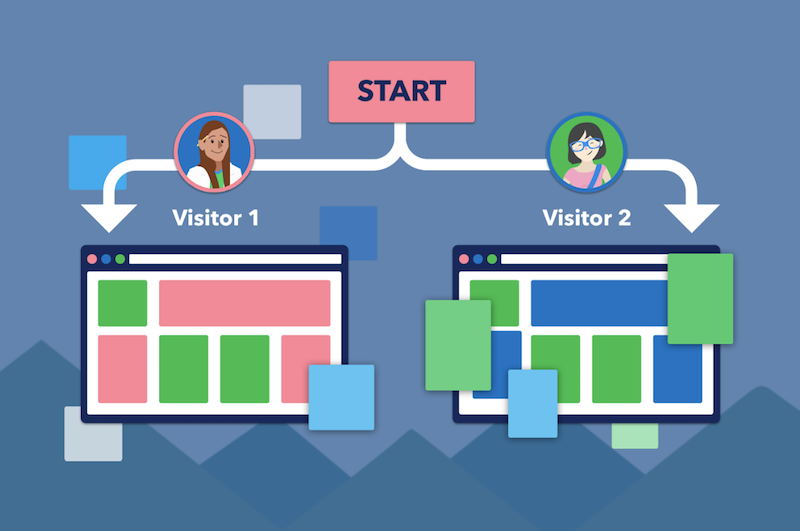
eCommerce Personalization is the art and science of delivering specific shopping experiences to targeted visitor subgroups to increase conversions and revenue, as well as improve the user experience:

ecommerce personalization example

It’s like any form of personalization. You have to have a few things in place:
  1. An ability to collect data on visitors (behavioral, transactional, demographic, etc.)
  2. An ability to analyze that data to find segments that may respond more favorably than the aggregate pool of visitors to a specific experience
  3. An ability to deliver an experience to that segment in real time
While it’s mostly used, at this point, by eCommerce Marketers, others such as engineers, product managers, customer success professionals, and sales professionals can also use personalization to increase ROI.

Read Original Post at https://instapage.com

Friday, September 13, 2019

Importance of Personalize eCommerce with Examples

All strategies outlined in this article should be deployed on your website using AB testing. Thusly, you will gauge the viability of these methodologies and whether they work for your or not. We exceptionally prescribe utilizing Invesp's The Essentials of Multivariate and AB Testing guide. 

eCommerce Personalization
While it's consistently been a focal point of eCommece Business Strategies, the guarantee of a customized web based shopping background remains to a great extent unfulfilled. It's an inquisitive condition in light of the fact that the insights demonstrate that there's a major interest, and result, from modifying the offering every one of your clients get when they visit your site. 

The Complete Guide to Ecommerce Personalization at Scale

  •     59% of online shoppers believe that it is easier to find more interesting products on a personalized  online retail store
  •     56% are more likely to return to a site that recommends products
  •     53% believe that retailers who personalize the shopping experience provide a valuable service
  •     45% are more likely to shop on a site that offers personalized recommendations

Read More...

Saturday, September 7, 2019

Smart eCommerce Personalization Examples That Drive your Sale High

If you’re not using eCommerce Personalization, you’re definitely losing revenue. In the last year, businesses have lost $756bn because of poor personalization.

But if you get it right, you can make huge gains. Gartner predicts a 15% profit boost by 2020 for those who successfully handle personalization in eCommerce.


In this guide, we’re going to show you some eCommerce personalization examples to inspire you so you can see your own lift in sales.

eCommerce Personalization

What is eCommerce Personalization?

How about we start with an eCommerce personalization definition:

Web based business personalization means indicating individualized offers, item proposals, and other substance to your guests dependent on their past activities, socioeconomics, and other individual information.

Personalization guarantees that your offers are applicable.

It's difficult to over-underline the significance of personalization in eCommerce. The most recent eCommerce personalization patterns recommend that guests need more, instead of less personalization. As per Janrain, 74% of individuals abhor being demonstrated unessential substance.


Read More...

Friday, August 23, 2019

Importance of Personalized Ecommerce and Their Tactics

In this article, we'll look at web based eCommerce Personalization models demonstrated to sell more, hold clients, and increment lifetime esteem. Here are only a couple of the outcomes we'll cover … 

eCommerce Personalization
  • How “continuous shopping” on your homepage can generate as much as $600 per 1,000 impressions
  • How leveraging user-generated content throughout your funnel lifts conversions 166% on average
  • How a smash hits page — customized by recency, notoriety, or topography — can drive a half on-page CTR

In case you're interested about getting comparative outcomes … plan a Shopify Plus demo today.


Read More...

Blogs

Social Media Tools for Every eCommerce Marketers

Are you a small business owner or solopreneur who has a limited amount of time to focus on marketing activities?  You’ll be happy to kno...